Crisp, percussive articulation. Razor-sharp dynamic contrasts. Chromatic scales, spooled out seamlessly. Fluid hand-over-hand crescendos.
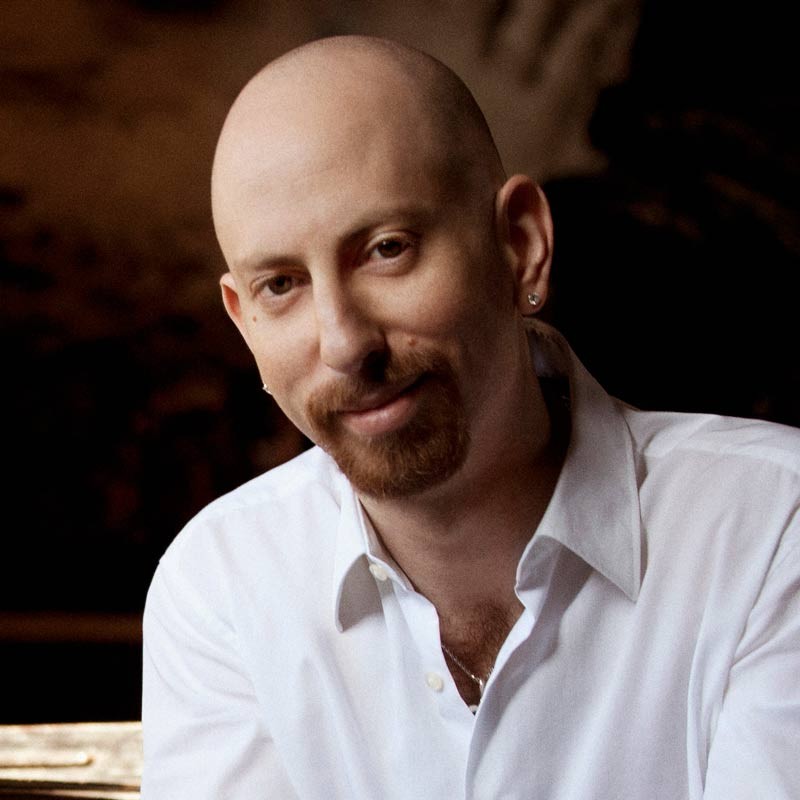
Adam Neiman attracted a full house at his January 17 Salon performance and garnered a lengthy standing ovation. The program of Brahms, Prokofieff, and Rachmaninoff varied from lush Romanticism to spiky Modernism, even as their own lives overlapped.
A single gargantuan piece consumed the first half of the program: Brahm’s epic Piano Sonata No 3 in F minor Op 5, (1853) composed when Brahms was all of 20 years old.
This sprawling Romantic piece spans five movements, and in places inspires visions and sounds of the 1948-49 revolutionary movements spanning Europe. Across its symphonic length, Brahms refers to predecessors Beethoven (Sonata Pathetique and the Fifth Symphony), and Felix Mendelssohn (Piano Trio No 2).
“A magnificent instrument”, is how Neiman described this evening’s piano. The restored 1905 nine-foot Steinway had also been the instrument of choice for four Salon performers over the past years (see the YouTube page for “Salon Piano Series”).
The program’s second half presented work by two Russian composers. Prokofiev’s Piano Sonata No. 5 in C Major, Op. 38/135 (1923) moves from lyrical tranquility to a quirky scherzo. Prokofiev embraced the modernism of 20th century music and was indeed “a thorny composer,” said Neiman, “known for thumbing his nose at us. There’s a lot of sarcasm and wit and charm.”
This performance was a kind of preview, as Neiman is working up Prokofiev’s complete Piano Sonatas for recording and release next year. “I’ve been living and breathing this man’s music,” he said.
Returning to a flavor of Romanticism, the evening concluded with Sergei Rachmaninoff’s “Six Moments Musicaux. Op. 16 (1896). The Six Moments are not to be perceived as necessarily related, Neiman said, but rather as a snapshot of various frames of mind, some reflecting the influence of Rachmaninoff’s mentor, Tchaikovsky.
They progress from a dark brooding Slavic melancholy, to a stormy ocean surf crashing against rocks, to a quiet reverential meditation, to a majestic symphonic statement, whose power equals that of Chopin’s 1831 Revolutionary Etude.
A gifted storyteller, Neiman offered not only astounding musical technique, but placed his performance within the context of 120 years of history.