
Hilda Huang | Concert: Saturday, February 28, 2026 · 7:30PM
Lecture/Recital: Sunday, March 1st, 2026 · 3:00pm | Salon Piano Series | Concert in Madison, WI
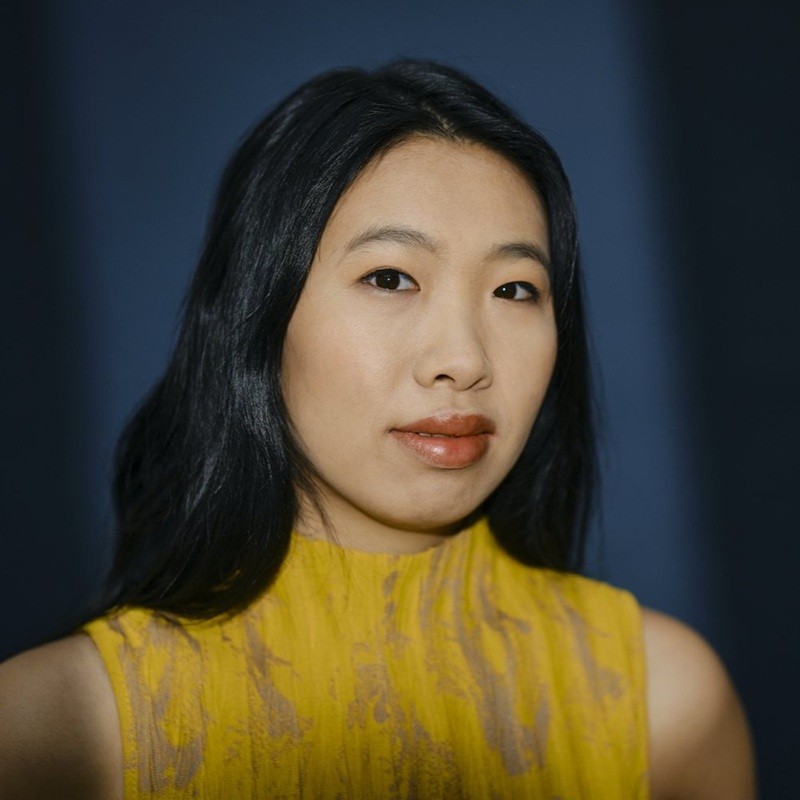
Hilda Huang
Concert: Saturday, February 28, 2026 · 7:30PM
Lecture/Recital: Sunday, March 1st, 2026 · 3:00pm
Program included: Bach
Internationally acclaimed artist Hilda Huang will play clavichord, harpsichord, organ, and piano during the Saturday concert. On Sunday she will give a lecture/recital, tracing the historical development of keyboard instruments. She will play works by Bach, Forqueray, and D’Anglebert.
Concert Sponsor: Susanne Michler

Program
Bach: D minor Toccata BWV 913
Forqueray: Le Morangis ou Le Plissay, Chaconne in D major
Bach: Lute Suite in E minor, BVW 996
Bach: CHROMATIC FANTASY BWV 903
Bach: Chorale Prelude, Erbarm dich mein, O herre Gott, BWV 721
D’Anglebert: Tombeau for M Chambonnieres
Bach: English Suite in D minor
Masterclass
It’s not unusual to see a gifted musician present a thoughtfully programmed recital for the Salon Piano Series.
But it’s extraordinary to see someone play on four different instruments, tracing a historical and musical theme, and relating that to her own artistic development.
Hilda Huang’s February 28 concert and March 1 lecture/demonstration featured music of the Baroque, including J.S. Bach and composers who influenced him, through the medium of one primary instrument: the harpsichord.
A clavichord, organ, and modern piano served as additional vehicles for demonstrating the importance of ornamentation, harmonies, and arpeggiating in the French style of playing, and how that style swept into the music of Germany and Austria.
Since beginning to play Bach at age 10, Hilda Huang has won several international performance prizes. She currently serves on the faculty of the Sweelinck Academy at the Conservatorium van Amsterdam.
Her Salon program included Bach’s Lute Suite in E minor, the Chorale Prelude “Erbarm dich mein, O herre Gott,” and the English Suite No 6 in D minor. To demonstrate the French style, she included pieces by Antoine Forqueray and François Couperin.
Huang’s playing style includes elements of the North German organ style and the French harpsichord style. She remarked that her interpretation of his music has changed markedly over the years. “There is a different version of me at each point in life, and a different version on each instrument. I play different ornaments on the same piece across different concerts.” Photocopies of Baroque era manuscripts illustrated how to execute ornamentations including cadence, double cadence, cheute, arpege, and detache.
She explained the differences between keyboards with uniform touch, including harpsichord and organ, and those with dynamic touch, like the piano.
“Any concert is a collaborative exercise, between the instrument builder, the composer, and the performer,” she said. “Keyboards are among the most mechanical of instruments, so performers depend on great builders and great composers to produce sonorous music. And the performer looks for the best way to touch each one to produce the best sound.”
Because these instruments are mostly wooden, the sound is darker. “That speaks to me,” she said, “because I feel this style of music is deeply internal and personal. And connected to my feeling of being connected to that moment in time, with the vibration of the instrument.
She concluded the performance and the lecture demonstration with words of gratitude. “One rarely has the chance to play multiple instruments in one night. I’ve never done this before. Thank you, Tim Farley, for assembling, and tuning, all these instruments.”
The instruments
Pipe organ: Laukduff company, Weiskenshein, Germany
A Silbermann clavichord built from scratch by Tim Farley. A copy of the instrument that J.S. Bach owned.
Harpsichord: a two-manual Klinkhammer made in Amsterdam in 1994.
Modern piano: 1878 Steinway B with original board and harp, made of Brazilian rosewood. with new action components.
Paul Baker